Seller Relationship Management (SRM) helps marketplace operators manage sellers as an ongoing operational function — covering performance, compliance, and day-to-day execution without expanding internal teams.
Built for marketplaces where seller operations are business-critical, not occasional.
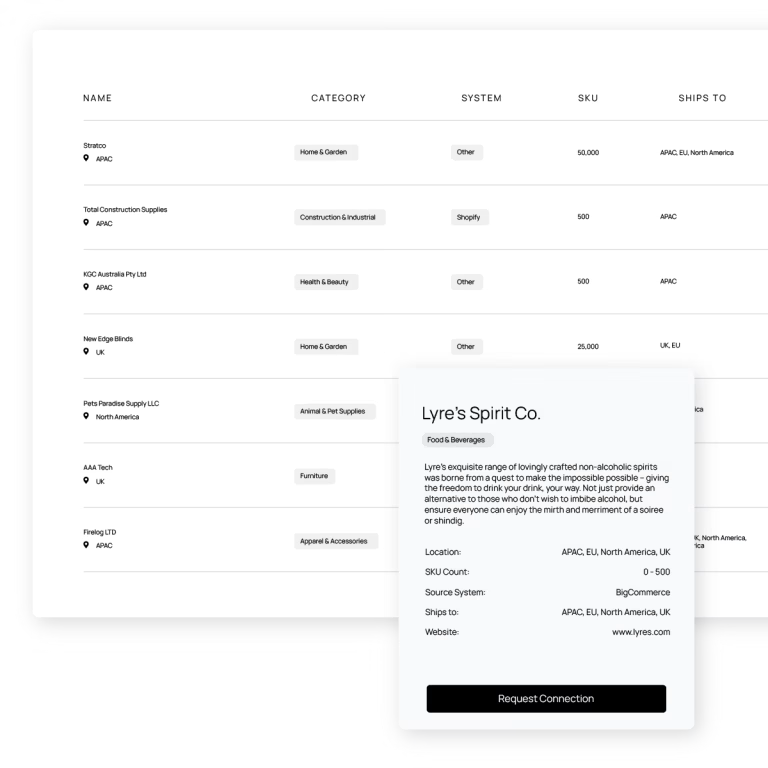
Seller Relationship Management (SRM) is Marketplacer’s contracted seller operations service, designed for marketplaces that have moved beyond activation and into scale. SRM acts as an extension of your internal team, managing the ongoing seller lifecycle — from onboarding and compliance through to performance, support, and governance.
It’s built for operators who need consistency, accountability, and control across large or complex seller ecosystems. SRM is not about adding more sellers. It’s about operating sellers reliably, at scale.
Maintain reliable performance across large and growing seller ecosystems.
Minimise issues across compliance, service levels, returns, and refunds through structured governance.
Support more sellers and categories without building or stretching internal teams.
Clear ownership, defined processes, and regular reviews keep operations under control.
Provide sellers with clear standards, consistent support, and predictable processes at scale.
Free internal teams to focus on growth, customer experience, and commercial priorities.
SRM provides structured, ongoing support across the seller lifecycle, turning complexity into a predictable operating model.
SRM operates through a structured operating model designed to provide consistency, visibility, and accountability as seller ecosystems scale.
A dedicated Marketplacer SRM team works alongside your organisation, acting as an extension of your internal operations. Responsibilities, success metrics, and escalation paths are clearly defined from the outset.
SRM runs on a structured cadence, including regular check-ins, performance reviews, and operational reporting. This ensures issues are identified early and resolved consistently.
Operational responsibilities are clearly split between your team and Marketplacer's SRM team. You retain ownership of strategy, customer experience, and commercial decisions, while SRM manages day-to-day seller operations.
Issues related to performance, compliance, or service levels are managed through agreed escalation processes, ensuring speed, visibility, and accountability.
Seller Relationship Management is designed for marketplaces where seller operations require ongoing, structured oversight to maintain performance and control at scale.
SRM is backed by Marketplacer’s deep operational experience supporting large-scale marketplaces across retail, B2B, and loyalty models.
With years of hands-on experience managing complex seller ecosystems, Marketplacer brings established processes, governance frameworks, and operational discipline to seller management — helping operators scale with confidence.
Global Team of Seller Strategists
Dedicated Data & Insights Team
Experienced Onboarding Specialists
15+ Years of Marketplace Leadership












SRM provides a structured and reliable way to manage sellers as your marketplace scales — without straining internal teams or compromising standards.
We’ll help you assess whether SRM is the right fit for your scale.
For more questions, contact us.
Seller Relationship Management (SRM) is Marketplacer’s contracted service for managing sellers as an ongoing operational function. It covers day-to-day seller operations, performance management, compliance, and governance for marketplaces operating at scale.
Curator focuses on activating sellers quickly through sourcing, vetting, and enablement.
SRM focuses on operating sellers over time — managing performance, service levels, compliance, and operational complexity as marketplaces grow.
Many operators start with Curator and introduce SRM when seller operations become business-critical.
SRM is typically introduced when:
If seller management is becoming a continuous responsibility, SRM is usually the right next step.
No. SRM acts as an extension of your team, not a replacement. You retain ownership of marketplace strategy, customer experience, and commercial decisions. SRM manages the day-to-day seller operations required to support those decisions at scale.
SRM manages ongoing seller operations, including:
The exact scope is defined based on seller volume and complexity.
Yes. SRM can manage sellers activated through Curator, sellers sourced internally, or a combination of both. Many operators use Curator for activation and SRM for ongoing operations across the same or different categories.
SRM is designed for marketplaces operating at scale or with higher operational complexity. It is not typically required for early-stage marketplaces or operators who only need help activating sellers.
SRM is delivered as a contracted service and scoped based on seller volume, operational complexity, and support requirements. Commercial details are defined collaboratively during engagement planning to ensure the model fits your marketplace needs.
